
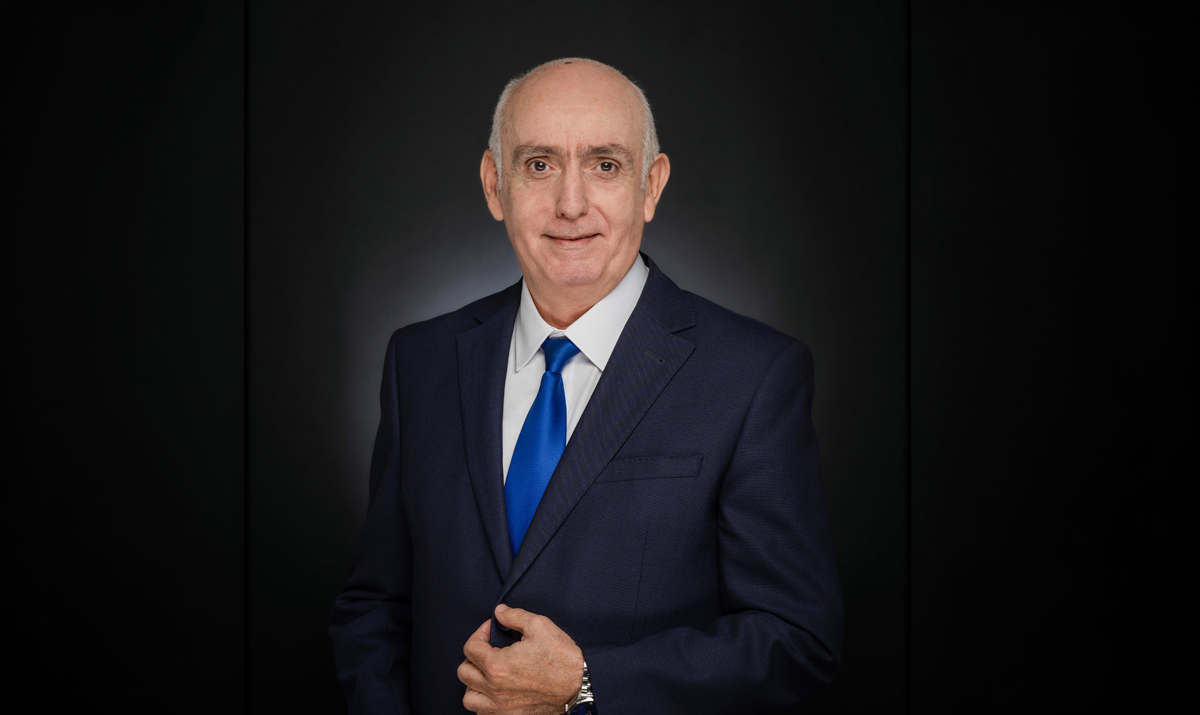
14 Jul Interview with Mr. Nour Eddine Daoudi, CEO, SONATRACH
Sonatrach is entering one of the largest investment programs in the region through 2030, including extensive drilling and field development. What makes this current phase of growth particularly transformative for Sonatrach?
We have launched an ambitious five-year program for 2026–2030 with a total investment of around $60 billion, or about $12 billion per year. Around 75–80% of this budget will be dedicated to upstream activities to sustain current production levels and renew our oil and gas reserves. Exploration has become more challenging than in the past. Discovering new resources is increasingly complex, requiring advanced technologies to reduce geological risk. While previous efforts focused mainly on near-field exploration, we are now moving toward frontier areas that demand stronger capabilities in geophysics, geology and investment.
For field development, we are also investing in enhanced oil recovery technologies to improve efficiency and maximize recovery depending on reservoir characteristics. At the same time, we continue to develop high value-added activities, particularly petrochemicals and transformation, which strengthen Sonatrach’s industrial integration and long-term growth.
In 2025, Sonatrach made around 17 discoveries, with total resources exceeding 100 million barrels of oil equivalent in place, across both proven and possible volumes. This strong performance confirms our decision to further increase investment in exploration. Our priority is not only the number of discoveries, but their size and economic value. The results are already encouraging: in early 2026, we achieved more discoveries than in the same period of 2025, reaching over 130 million barrels of oil equivalent in terms of evaluated resources. We are also active internationally, including in Libya, where we operate with partners in two blocks in the Ghadames Basin. One field is under development study and we recently made a new discovery. It is still under evaluation, as we need further geological and reservoir analysis before confirming its full potential.
As one of Africa’s leading energy companies, exporting to both Africa and Europe, how is Sonatrach shaping Africa’s energy future and strengthening regional cooperation?
Sonatrach’s strategy is to strengthen its presence in Africa and develop cooperation with neighboring countries, in a spirit of South–South partnership. In upstream activities, we are active in Niger and the Kufra Basin, where earlier discoveries are being developed. We are also working in Libya and have recently signed memoranda of understanding with Mauritania, Chad and Burkina Faso. In addition, we are exploring opportunities in other regions such as Mozambique.
In midstream, our main African project is the Trans-Saharan Gas Pipeline, currently under technical study ahead of a final investment decision. This major project would link Nigeria to Algeria via Niger over nearly 2,5000 miles and would be strategic for both Africa and Europe. It would connect to our gas hub at Hassi R’Mel, one of the world’s key gas fields, and reinforce exports to Europe through existing routes such as Medgaz to Spain and the pipeline to Italy. These infrastructures strengthen Algeria’s role as a strategic bridge between Africa and Europe and support the security of our long-term gas supply commitments to European partners.
Sonatrach is pursuing a diversification strategy, including investment in desalination. What role do these projects play in its overall strategy?
Climate change and water scarcity are global challenges, not limited to Africa. In Algeria, the authorities have launched an ambitious seawater desalination program to address this issue. In 2025, five major desalination plants were completed, each with a capacity of around 300,000 cubic meters per day, helping to secure more than 40% of national water needs. In November and December 2025, three additional plants of the same capacity were launched in the western part of the country, with further projects planned in the central and eastern regions. The national objective is to increase desalinated water to over 50%, and ultimately reach around 60% of Algeria’s drinking water supply.
With geopolitics increasingly important and the US seeking new energy partnerships, what opportunities does the US market offer Algeria beyond exports, particularly in exploration and development?
We are in discussions with two major US companies, ExxonMobil and Chevron. These talks have been ongoing for some time, as we seek to establish strong partnerships. Our objective is to diversify our international partnerships beyond European companies and attract leading global players that can bring advanced technology, expertise and investment. Exploration is highly risky and capital-intensive and until now Sonatrach has largely carried this risk alone. Through partnerships, we aim not only to share risk, but more importantly to reduce it by leveraging world-class technologies and know-how.
We are also looking to expand beyond conventional resources into unconventional ones, including shale gas and oil. Studies suggest that Algeria has significant potential, among the largest in the world. For this reason, we want to work with industry leaders such as ExxonMobil and Chevron, particularly in conventional exploration and development, where they have strong global expertise. In exploration, we are also looking to improve our reserves portfolio by expanding into offshore activities. Studies show that offshore could offer significant potential for Algeria. Many of the world’s recent major discoveries have been offshore, particularly in the Eastern Mediterranean, including Egypt, Cyprus, Malta and Libya, which are not far from Algeria. We believe Algeria has similar opportunities, but offshore exploration is highly complex and costly.
For Sonatrach, it is a new frontier, so we aim to develop it through partnerships. Working with international partners will allow us to access advanced offshore technologies, transfer know-how to Algeria and reduce exploration risk while increasing our resource base.