
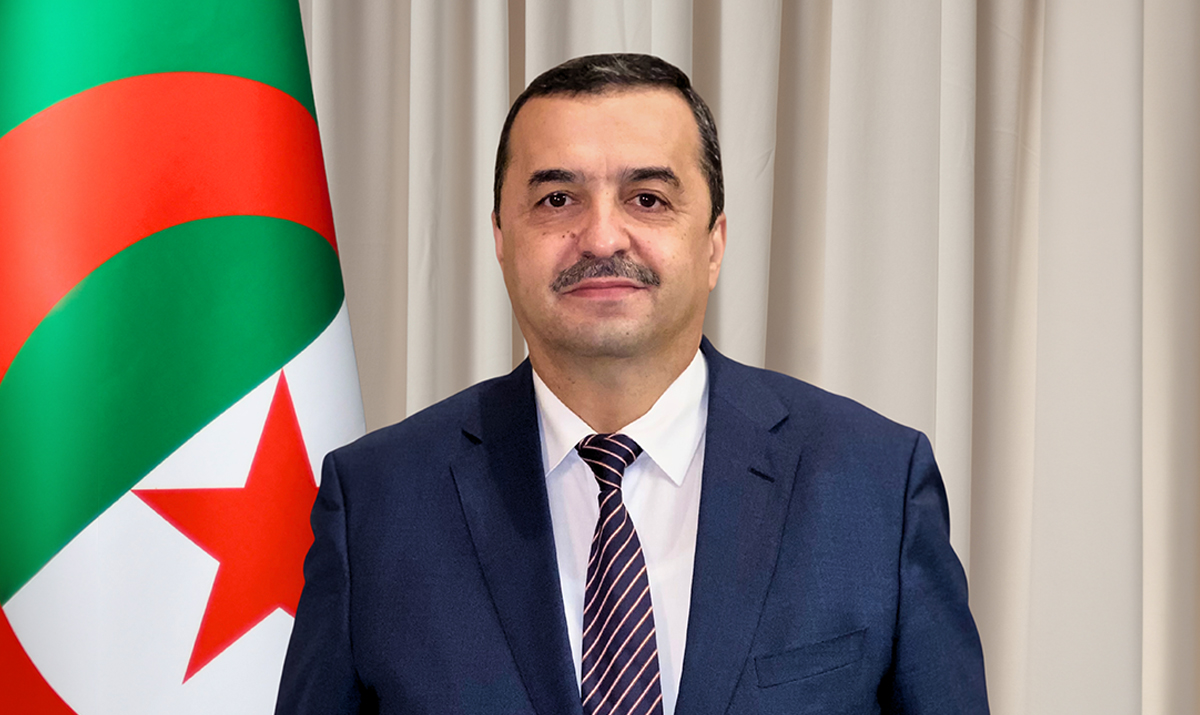
15 Jul Interview with HE Mohamed Arkab, Minister of State, Minister of Hydrocarbons and Mines, Algeria
The hydrocarbons sector has always been a pillar of Algeria’s economy. Can you outline its importance to the country and the legal tools which facilitate it?
Since independence, the hydrocarbons sector has been the engine of growth, financing the country’s infrastructure and public services. Its role is not limited to extraction, but dominates almost all macroeconomic indicators of the national economy, representing approximately 40% of state budget tax revenues and 20% of GDP. The development policy for the hydrocarbons and mining sector aims to ensure the country’s long-term energy security, the valorization of hydrocarbons and mineral products, the provision of mineral substances to economic sectors and the maintenance of an export level that allows for the financing of the national economy. Environmental protection is also included as a priority in the sector’s action plan through actions implemented by companies in the sector to reduce greenhouse gas emissions (methane, flared gases and carbon).
In parallel, the sector also contributes to the country’s water security through the construction of seawater desalination plants, in collaboration with the water sector. Nineteen seawater desalination plants are currently in operation, with a total capacity of almost five million cubic yards per day, thanks to the commissioning of five new plants in 2025, which has made it possible to cover 40% of the national drinking water demand. Furthermore, a complementary program of six new desalination plants, each with a capacity of 392,000 cubic yards per day, is underway, enabling the national drinking water supply to reach 60% by 2030. The sector aims to leverage its technical potential and comparative advantages to strengthen its position as a reliable and dependable supplier. Major structuring projects of national and regional interest have been initiated, supported by a significant basic infrastructure, primarily consisting of two gas pipelines connecting our country to Europe and a large fleet of liquefied natural gas (LNG) carriers. This allows the sector to fulfill its obligations to all its customers and, through LNG, enjoy flexibility in regional gas markets.
In order to maintain and strengthen this strategic position, Algeria has embarked on an ambitious investment strategy in the hydrocarbons sector, covering the entire value chain, which will allow us to increase our primary crude production to over 200 million tons equivalent of petroleum and meet growing domestic market demand. This strategy is supported by a renewed legal framework, notably Hydrocarbons Law No. 19-13, which has enhanced the attractiveness of the sector, as well as by the success of the Algeria Bid Round 2024, which resulted in the awarding of five of the six blocks offered. A second call for expressions of interest is planned to be launched by the National Agency for the Development of Hydrocarbon Resources (ALNAFT) later this year. Furthermore, major regional projects, such as the Trans-Saharan Gas Pipeline (TSGP), hold significant strategic potential for both Europe and Africa in terms of diversifying energy sources and regional energy integration.
Can you give us an overview of the upstream expansion and exploration strategies, including production objectives, license cycles and partnership models?
Algeria has launched a strategic offensive to revitalize its upstream sector, supported by an attractive legislative framework: Law No. 19-13, governing hydrocarbon activities. We have also enacted a massive investment plan of $60-$70 billion over the period 2026-2030, 80% of which is earmarked for upstream oil and gas, aiming to intensify exploration efforts and develop new fields, in a context marked by rising domestic demand for gas and petroleum products. Algeria is a major energy player, producing over 100 billion barrels of natural gas annually and approximately 1 million barrels of oil per day and aims for sustained growth to continue meeting its domestic energy needs in the medium and long term, while maintaining a significant presence on international energy markets. The objective is to achieve a total primary hydrocarbon production of over 200 million tons of oil equivalent by 2030, compared to a current average annual production of 194 million tons of oil equivalent.
Algeria remains largely underexplored, with only 40% of its mineral resources prospected, out of a total hydrocarbon mineral area of over 656,000 square miles. Furthermore, the exploratory effort conducted by Sonatrach resulted in 35 discoveries during the 2024 and 2025 fiscal years (18 discoveries in 2024 and 17 discoveries in 2025) across eight sedimentary basins with a notable concentration in the Amguid Messaoud, Berkine and Illizi basins. These results reflect a consistently satisfactory overall performance, both in terms of the volumes discovered and the exploitation of the existing geological potential.
Algeria is intensifying the promotion of its national hydrocarbon mining sector through ALNAFT, targeting six areas for the Algeria Bid Round 2024 to attract new investors. This strategy is based on Law 19-13, which offers a more attractive contractual and fiscal framework (participation agreements, production sharing, risk services). The first Algeria Bid Round 2024, launched under Law 19-13, resulted in the signing of five hydrocarbon contracts with major companies. As part of the preparation for the second call for tenders, Nomination Processes have been launched by ALNAFT to allow oil companies to choose blocks from among 24 selected blocks, with a call for tenders planned for the 2026 fiscal year.
Law 19-13 introduced three more flexible types of contracts for foreign investors: Participation Contract; Production Sharing Contract and Risk Services Contract. This law also eased taxation, through the reduction of the overall tax burden to improve the profitability of complex projects and enabled access to data to facilitate the technical evaluation of deposits by investors. The upstream oil and gas sector attracts more than 70% of total hydrocarbon investments with the aim of intensifying exploration efforts to replenish proven reserves and compensate for the natural decline of mature fields, strengthening strategic partnerships, attracting foreign investors by sharing risks and offering an attractive legal framework, equipping infrastructure with cutting-edge technologies to improve recovery rates and reducing greenhouse gas emissions and launching energy efficiency projects integrated into extraction.
How is Algeria developing its downstream sector and creating more capacity and adding more value to this industry?
The national refining system in Algeria currently has six operating refineries, located in Algiers, Arzew, Skikda, Hassi Messaoud and Adrar. The overall processing capacity amounts to 30.6 million tons per year, of which five million tons per year are dedicated to condensate treatment. The distribution of actual crude oil and condensate processing capacities by refinery is as follows:
Algiers Refinery: 3.7 million tons/year;
Arzew Refinery: 3.75 million tons/year;
Skikda Refinery: 16.5 million tons/year;
Hassi Messaoud Refinery: 1.07 million tons/year;
Adrar Refinery: 600,000 tons/year;
Skikda Condensate Refinery: 5 million tons/year of condensate.
Thus, the national refining fleet provides diversified coverage for both crude oil and condensate processing, contributing to meeting the needs of the national market for petroleum products. In order to secure the supply of fuel to the national market in the long term and, as a priority, to meet the national market demand for petroleum products and export the surplus fuel production, a refining activity development program has been launched focusing on the construction of a new refinery in Hassi Messaoud with a processing capacity of five million tons per year of crude oil, scheduled to be commissioned in 2027, aiming to fully meet the national market’s needs for fuel and to export additional volumes of refined products. We are also undertaking the construction of a fuel oil cracking unit at the Skikda refinery with a processing capacity of 2.3 million tons per year of fuel oil and the construction of a reforming unit at the Arzew refinery with a processing capacity of 780,000 tons per year of naphtha, scheduled to be commissioned in 2028.
For the growth of the petrochemical industry and expansion of value-added hydrocarbon industries, the following projects are currently underway:
- Project to build a Methyl Tert-Butyl Ether (MTBE) unit – Arzew Industrial Zone. Capacity of 200,000 tons per year of MTBE for an investment of $544 million, with commissioning scheduled for Q1 2026. This will replace current imports of the MTBE additive for gasoline production and create jobs.
- Project to build a Linear Alkyl Benzene (LAB) unit – Skikda Industrial Zone. Capacity of 100,000 tons per year of LAB, investment of $594 million. The start-up is scheduled for September 2027. Opportunity: to valorize kerosene and benzene from refining and replacing LAB imports destined for the detergent industry.
- PDH/PP Complex (Propane Dehydrogenation and Polypropylene Production) – Arzew Industrial Zone. Capacity of 710,000 tons per year of processed propane and 550,000 tons per year of polypropylene. Investment of $1.5 billion. Commissioning scheduled for December 2027. Opportunity: replacement of polypropylene imports and priority given to supplying the local market.
We are also pursuing a PDH/PP international partnership in Turkey which is a joint venture between Sonatrach (34%) and Ronesans Holding (66%), with a capacity of 600,000 tons per year of processed propane and 480,000 tons per year of polypropylene, for a total investment of $1.769 billion (65% project finance, 35% equity). Commissioning is scheduled for February 2028. This is to secure a long-term market for Algerian propane until 2040 and generate dividends in foreign currency as a shareholder.
What reforms of the hydrocarbons law have you undertaken to make the industry more business-friendly and attractive to investors and are there other incentives for foreign investors to come to Algeria?
Algeria has undertaken an ambitious reform of its legal framework with Law No. 19-13 of 2019, marking a turning point in the governance of the hydrocarbons sector. This reform addresses a clear need: to adapt our model to international standards in order to attract more investment in an increasingly competitive energy environment. Specifically, this law introduces a modern and flexible contractual architecture, allowing investors to choose between several types of contracts – participation, production sharing and risk services – depending on the project profile. This ensures better risk allocation and greater visibility on profitability, two key factors for investors.
From a tax perspective, the reform has significantly revised the existing mechanisms. The system is now more progressive, directly linked to project profitability and better adapted to oil cycles. This means that capital-intensive or high-risk projects, particularly those involving exploration or complex areas, benefit from more favorable conditions. Similarly, certain charges, such as royalties, have been adjusted — to around 10% — to improve the profitability of investments. This approach makes economically viable projects that previously could be postponed. Furthermore, the law strengthens legal stability and transparency. Procedures have been simplified, deadlines shortened and rules clarified, thus contributing to a significantly improved business climate. This openness is part of a balanced partnership approach, where Sonatrach remains a central player, while collaborating with international partners who contribute technology, expertise and financing.
The results of this reform are now visible. Algeria is attracting renewed interest from major energy companies, with Sonatrach signing nine hydrocarbon contracts under the new law through direct negotiations with major international players such as ENI, Occidental, Sinopec, Pertamina, Repsol and TotalEnergies. A major turning point was also reached with the launch of the Algeria Bid Round 2024, the first tender since 2014 and the first organized under the new legal framework. The results are particularly significant: five out of six blocks have been awarded and five contracts have been signed with international companies, some of which are thus marking their first entry into the Algerian hydrocarbon sector. All of these contracts, concluded through both direct negotiations and the Bid Round 2024, are expected to ultimately mobilize investments of several billion dollars over the entire lifecycle of the projects, with particularly promising production prospects.
This momentum not only confirms the renewed attractiveness of the hydrocarbon sector in Algeria, but also strengthens the country’s position as a major and reliable energy supplier on international markets, particularly in a context marked by strong demand for secure and sustainable energy sources.
Within this framework, Algeria is already preparing for the next Algeria Bid Round 2026, which is part of a multi-year strategy to revitalize exploration. This round is already showing promise, given the nomination process recently completed by ALNAFT, reflecting the sustained interest of operators and the positive momentum underway in the sector. In parallel, major international companies have expressed concrete interest, with advanced discussions underway, notably with ExxonMobil, Chevron, Occidental and other international companies such as the Italian company ENI, for the development of large-scale projects. These projects, representing potential investments of several billion dollars, aim to increase production capacity, secure exports to international markets — particularly European ones — and strengthen Algeria’s role as a reliable energy supplier. In a global context marked by the pursuit of energy security, Algeria now offers a particularly attractive combination: significant resources, existing infrastructure and a competitive regulatory framework. In short, Algeria is no longer just a historical hydrocarbon producer, but a structured, reliable and resolutely long-term investment destination.
With Algeria’s central position in relation to Europe, improving relations with the US and instability in Russia/Ukraine and the Middle East, how can Algeria prove itself to be a reliable gas provider for the future and what long-term contracts are you pursuing for gas exports?
Algeria now occupies a central position in regional and Euro-Mediterranean energy diplomacy, based on a constant principle: reliability. For several decades, our country has always honored its contractual commitments, including during periods of high market volatility and major geopolitical tensions. This consistency has forged Algeria’s credibility as a reliable, predictable and responsible supplier, on which our European partners can rely in the short, medium and long term. Our strength rests first and foremost on robust infrastructure, developed and mastered through long industrial experience. The Medgaz pipeline directly connects Algeria to Spain and constitutes a pillar of energy security for the Iberian Peninsula. Transmed, for its part, is a strategic route to Italy and Southern Europe, contributing to the diversification of European supplies. In addition to this infrastructure, our LNG capacity offers crucial commercial and logistical flexibility, enabling us to transport Algerian gas to various markets beyond pipeline networks.
Algeria is not only consolidating its achievements; it is also preparing for the future. The TSGP project, 2,500 miles long and with a planned capacity of over one trillion cubic feet per year, will connect Nigeria to Algeria via Niger. It will allow the transport of Nigerian gas to Europe, leveraging our existing infrastructure, thus strengthening Algeria’s role as an African and Mediterranean energy hub. This project illustrates our vision of regional energy integration that benefits both Africa and Europe.
In a context marked by the reshaping of energy geopolitics, Algeria is establishing itself as an essential strategic partner. For Europe, we contribute to the diversification of supply sources and the reduction of critical dependencies. For Africa, we support a dynamic of structuring energy integration and cooperation. This position is based on long-term contracts, which guarantee visibility and stability for both investors and consumers.
Finally, our ambition goes beyond simply supplying gas. Algeria is investing in emissions reduction, the development of green hydrogen and low-carbon ammonia, as well as the continuous modernization of its infrastructure. We intend to remain a major player in energy security while becoming a key partner in the global energy transition. Our message is clear: Algeria is and will remain, a reliable and strategic pillar of the regional and international energy architecture.
What existing infrastructure supports Algeria’s commanding position in European and African energy security and what future upgrades do you have planned?
Algeria occupies a strategic position in the international energy market, particularly thanks to its natural gas exports to Europe via two major pipelines: the Enrico Mattei pipeline, which transports gas to Italy via Tunisia, with an actual capacity of 1.15 trillion cubic feet, as well as Medgaz, directly linking Algeria to Spain, with an actual capacity of almost 400 billion cubic feet.
Furthermore, Algeria has three oil ports for hydrocarbon loading (Arzew, Bejaia and Skikda), four LNG complexes in Skikda and Arzew (capacity of 20 billion cubic feet LNG per year), a total LPG separation capacity of 10.4 million tons per year and a national refining capacity of nearly 31 million tons per year, with six national refineries. These key infrastructures confirm Algeria’s central role in global energy supply.
Regarding the transport of liquefied gas, Sonatrach’s subsidiary Hyproc SC, responsible for maritime hydrocarbon transport, has a fleet of 15 vessels which it manages outright and in partnership (JV), including: six LNG carriers loading from the Arzew and Skikda terminals for Sonatrach customers, six LPG carriers ensuring deliveries both domestically and internationally, two bitumen tankers for transporting bitumen and one refined petroleum product carrier. In addition to the vessels mentioned above, Sonatrach sometimes uses chartering third-party vessels to absorb production peaks or meet specific demands on the global market
Furthermore, as part of its efforts to strengthen connectivity with Africa, Algeria intends to finalize the TSGP project with a nominal capacity of 1.06 trillion cubic feet per year, which will connect the gas infrastructure of Nigeria to the Algerian distribution networks to Europe via Niger, which will provide access to gas for the populations of villages located all along the route of this pipeline, increase the supply of gas to Europe, strengthen Algeria’s position on the regional and global stage and contribute to regional energy security.
Our country is also positioning itself as a key player in the hydrogen sector, thanks to major assets such as exceptional sunshine, a dense electricity and gas network and recognized expertise. In this context, studies are underway to create dedicated transport infrastructure to facilitate the delivery of this energy to international markets, particularly through the SoutH2 Corridor project, which aims to transport green hydrogen between North Africa and Europe. The development of this international-scale infrastructure will require the support and involvement of key players, especially international ones.
How is the investment landscape and climate for processing mining materials, what regulatory reforms are underway and how will foreign companies be attracted to the sector?
The mining sector is currently a major strategic lever for Algeria’s economic diversification. The country possesses significant geological potential, which remains largely unexplored. Aware of these challenges, Algeria has undertaken a profound reform of its legal framework through the new mining law, developed following an in-depth process of consultation and comparative analysis with international best practices. This reform aims to create a more attractive, transparent and competitive investment environment. The new regulatory framework introduces concrete measures to improve the sector’s attractiveness. It facilitates access to the mining sector through simplified and regulated procedures, while guaranteeing investors greater legal visibility and clear deadlines for processing applications. It also allows for greater flexibility, notably by authorizing investors to undertake exploration activities without the immediate obligation to create an entity under Algerian law.
Furthermore, the mining title system has been modernized to make titles assignable, transferable and usable for financing purposes, thus strengthening the bankability of projects. The text also provides for the possibility of direct access to the mining title in the event of an economically viable discovery, which is a key factor in encouraging risky investment during the exploration phase. The proposed framework also establishes a balanced partnership, with the possibility for national companies to participate in projects, according to terms adapted to the nature of the deposits, while allowing controlled access to foreign investment under conditions comparable to those of competing countries.
In parallel, particular attention is paid to developing the mining value chain. The objective is to go beyond extraction to encourage local processing of resources, strengthen local content and generate more added value in the national economy. Finally, the reform relies on a strengthened institutional framework, with mining agencies responsible for promoting investment, supporting operators and ensuring transparency and regulation of the sector, as well as on the development of geological infrastructure and access to information, which are key elements for reducing exploration risk.
In this context, the Algerian mining sector is experiencing a particularly promising dynamic, destined to play a structuring role in the country’s industrialization, job creation and the strengthening of non-hydrocarbon exports. The effects of this dynamic are already beginning to materialize, with the launch of the development of structuring mining projects, particularly in the iron, phosphate and lead-zinc sectors. These projects, often integrated, are part of a comprehensive industrial approach, from extraction to processing.